
#057 - Looking, Really Looking
How To See The Magic In Your Garden

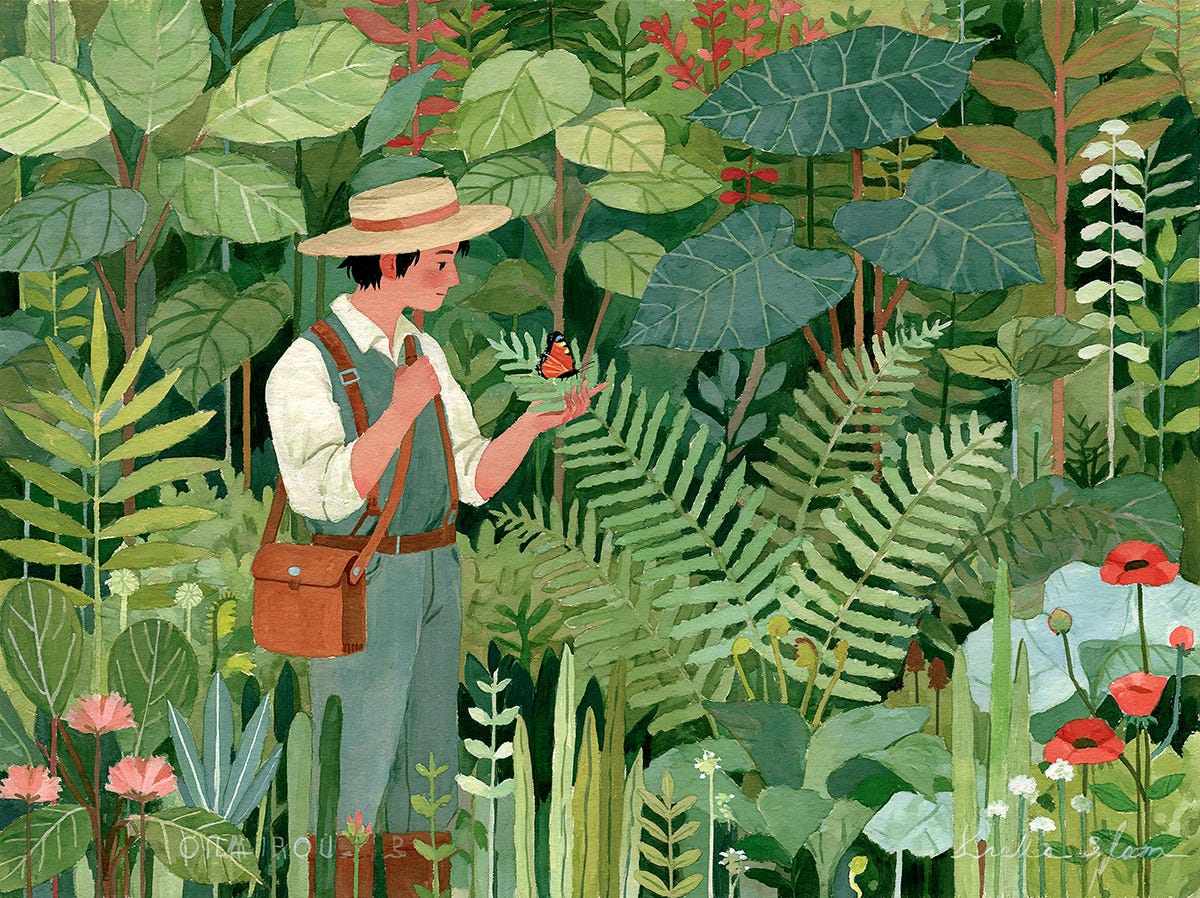
If you read Hot Plant Tips, you know I’m a very practical person. BUT, I do still manage to find meaning in the small things in my garden. I notice volunteer plants growing in weird places, flowers blooming earlier or later than expected, or when anything seems out of place, since I’ve known my garden for long enough to notice these things.
The things we see in the garden often have a clear horticultural explanation, and some of that comes from the pattern-making that happens when you look at the same situation every day, day after day. You might not recognize it, but a garden is always producing more information than we can process in the moment. Most of it only starts to mean something later, after the same condition appears again and again, or after something changes in a way we can finally recognize as out of the norm. I accidentally shut my irrigation system off for six months, and I was so puzzled by the changes it caused in my garden – it wasn’t disastrous, but it turned everything I knew about my garden on its head. We learn to read these signals by noticing patterns like when flowers bloom, when butterflies show up, or when we need to trim things back, and there are many more garden omens that come from this habit, and we’ll be digging into them today.
These old garden rituals and omens live in that magical overlap between observation and interpretation. When our minds are open, we treat flowers, insects, dew, and even the timing of the year as information that can be translated into something special. A family tradition can hold the power of harvest timing, romantic speculation, household protection, folk medicine, and anxiety all at once because weather, health, food, grief, love, and luck were never neatly separated in daily life before we had iPhones and TikTok.
Two of the traditions I grew up with were adopted from my Swedish family. One was the belief that the color of the first butterfly you saw in spring predicted what kind of year you would have. Yellow could mean luck, happiness, or abundance. A brown butterfly pointed toward grief or trouble. White was left up to interpretation, but we always said that it meant you were being visited by someone who missed you.
The second was a midsummer flower tradition. On midsummer night, you picked seven flowers and placed them under your pillow so you would dream of the person you were going to marry. As a child, I was perplexed by the concept of something so definite coming out of such a freeform exploration, but there was still something magical about venturing into the garden and grabbing what jumped out at you. All of this comes back to the power that the landscape holds, and the rules within it depend on timing, species, season, and how much attention you are willing to devote to it.
I’ve talked about it before, but Cicely Mary Barker’s Flower Fairies books fed that same part of my brain. Her first Flower Fairy book was published in 1923, and the series eventually gave spring flowers, summer flowers, autumn plants, trees, and winter plants their own voices. Barker invented the fairies for hundreds of individual flower types, and her plant specificity was so serious that I was outside every morning before going to school, checking each plant for a stray fairy inside a snapdragon.
Long before I had the language of plant families, phenology, or Sunset zones, these traditions gave me another kind of plant literacy. They suggested that knowing the difference between one plant and another was something special.
Now that I’m forty, garden omens and plant folklore are still important to me. They represent stories, rituals, warnings, wishes, and observations. They send you outside and make you notice a bug, urge you to pick a flower, understand the weather, or connect you to the spontaneous garden conditions around you. They make your everyday special, and I recommend keeping a small notebook with you at all times to write any important plant observations down.
Midsummer
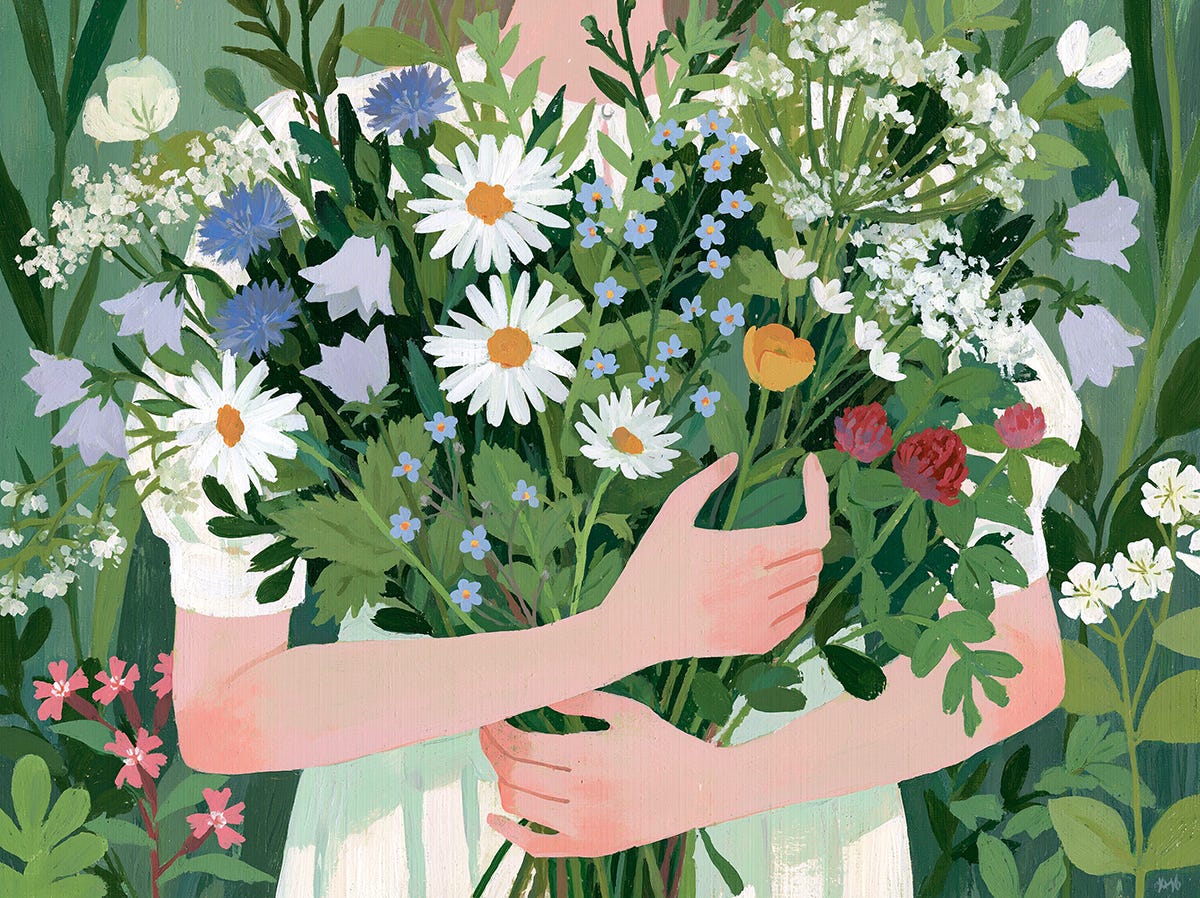
Midsummer has always been one of the richest times to look for this kind of plant folklore because it arrives during the sunniest part of the growing season in Sweden, where sun and warm weather can be scarce for the rest of the year. In Swedish tradition, midsummer is a time when plants were believed to have unusual power. Dew, springs, and flowers are treated as enchanted material. As I mentioned, flowers collected on midsummer night could be used for divination, healing, and protection, all at the heart of important household rituals.
The seven flowers under the pillow go way back in the Swedish folklore archives, and the rules are surprisingly specific. The traditional version calls for seven different species, picked in silence, ensuring that you connect with your surroundings as you hunt. In some parishes, you were supposed to climb over seven gärdesgårdar, split rail fences, picking one flower from each side. Another variation required the flowers to be gathered with your left hand while climbing the fences backwards, part of a wider motif where contrary movements bring a higher power to your everyday behavior.
There are no hard and fast rules to this tradition, but in case you’re curious, a true midsummer bouquet includes blåklint (cornflower), prästkrage (oxeye daisy), blåklocka (harebell), smörblomma (buttercup), förgätmigej (forget me not), Jungfru Marie sänghalm (lady’s bedstraw), tjärblomster (sticky catchfly), käringtand (bird’s foot trefoil), and red clover. I traveled to Sweden with my dad when I was ten, and I took a flower press with me to capture those wildflower moments forever.
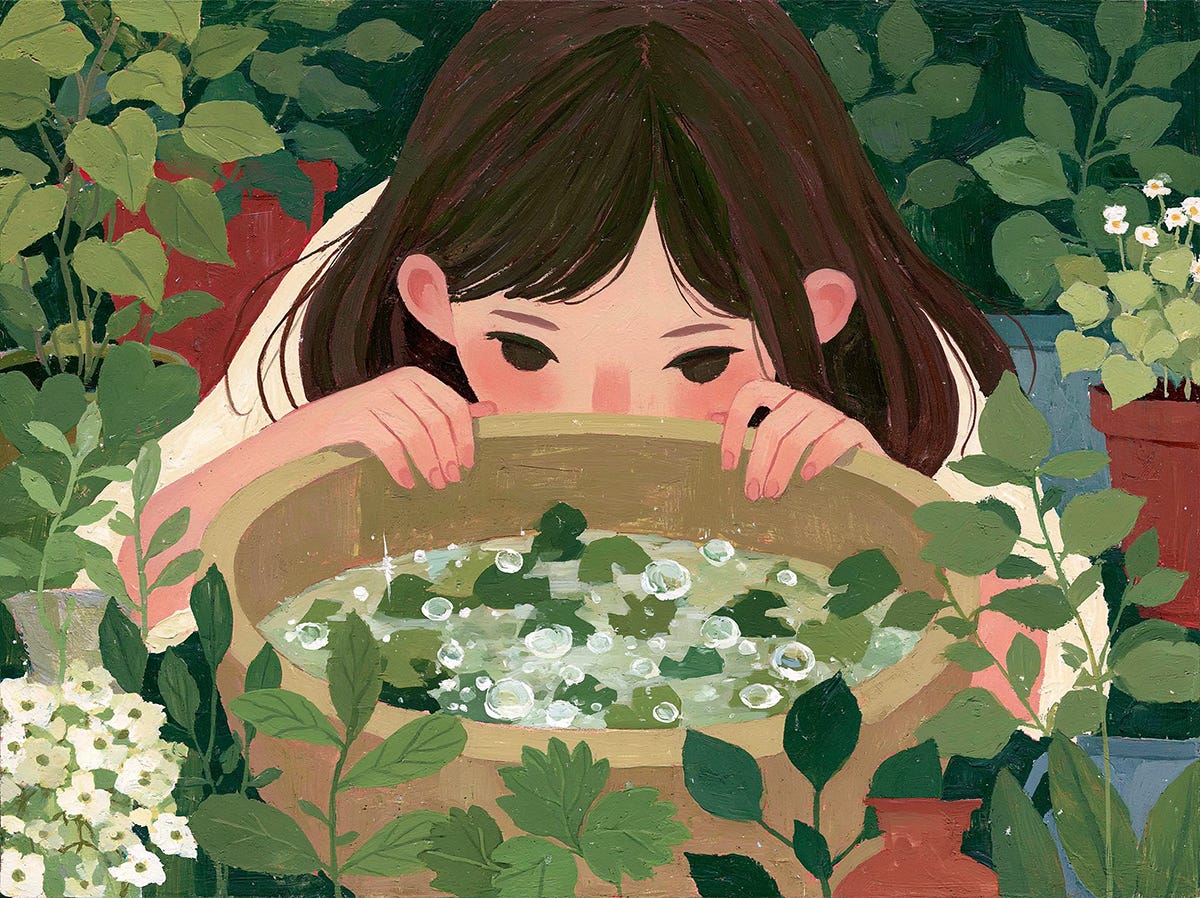
One of the other things I learned in Sweden was that dew is just as important as midsummer flowers. People collect it and use it for miraculous healing. It’s easy to overlook dew in your daily routine, but it has a physical garden condition tied to humidity, temperature, exposure, and air movement. Folk traditions give it power because it appears unexpectedly, but it is tied to actual climatic situations specific to your yard. My cousins said if you could collect enough of it, peering into a dish of the dew could reveal a future spouse, just like the flower tradition. The ritual of collecting dew in midsummer sends you into your garden at a specific time for a specific purpose, and leaves you solo for careful observation, without family or friends to cloud your vision of love.
Then there is the fern flower, one of my favorite pieces of Scandinavian botanical lore. Ferns reproduce by spores, so it’s botanically impossible for a fern to bloom, but that is probably exactly what helped this tale survive. In European folklore, ferns were said to bloom at midnight and grant luck, invisibility, and special knowledge to anyone who found it. Actually I just heard the ferns are about to bloom tonight – can you stay up and go take a look for me??
All of these beliefs have been carried through my family’s traditions, and over time they’ve developed layers and contradictions, and that’s precisely what makes them interesting. There is also an ecological layer to them, since they are deeply rooted in the spirit of the garden. The first butterfly of the year can actually indicate annual rainfall, the success of host plants, or other habitat conditions. A modern gardener might read the butterfly encounter through phenology or pollinator ecology, but someone with a little more joie de vivre might connect it to their forthcoming fame and fortune. It really doesn’t matter how you feel about the butterfly itself, as long as you take the five seconds to notice it fluttering by.
Sign Language
Like I said, good gardeners and landscape architects will read the signs within their projects, even when the script has been flipped. A familiar plant flowering earlier than expected can lead you running back through recent weather, pruning, irrigation, heat, or stress. A volunteer sprouting in your gravel driveway marks a special place where flora, fauna, moisture, and gentle care lined up long enough for germination, telling you that it’s time you planted something there.
Garden omens are worth consideration because they preserve an older habit of attaching attention to small seasonal events. Some interpretations are strange, funny, grim, or contradictory, which is part of their value as folklore. They belong to people trying to understand weather, fertility, health, courtship, luck, and loss through the living material around them. And I really do believe in them.
The first butterfly of the year can tell you something about the year ahead, even if the message arrives through color, timing, memory, and whatever you were carrying when you saw it. Seven flowers placed under a pillow can shape your dreams because the act of gathering them already embedded you within centuries of traditions and inside a beautiful landscape dense with inherent messages.
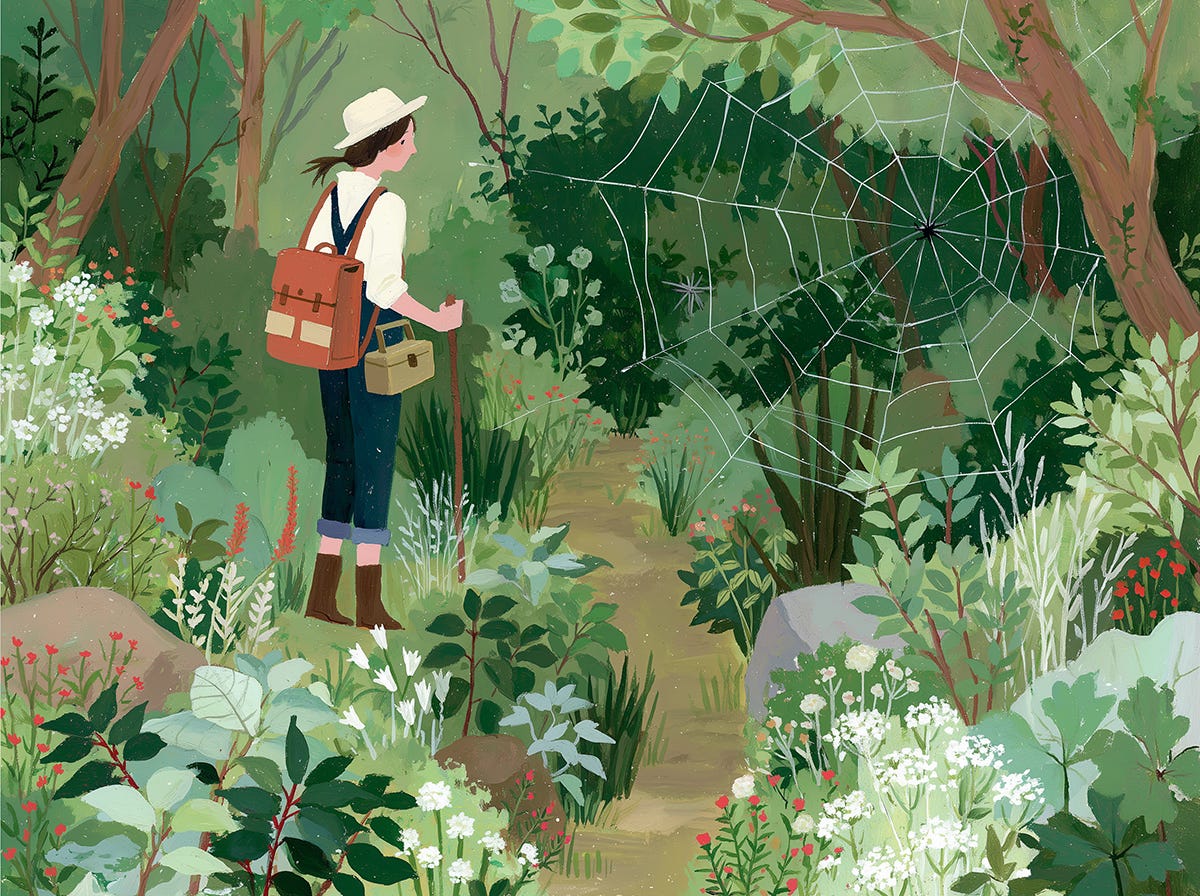
A garden contains small moments that are observable and interpretable if you open your mind to them. The first butterfly, midsummer flowers, or a garden spider in your path, each one of them means something if you think about it long enough. They are all easy to overlook, but if you give them a story, or a ritual, your garden becomes a reliable medium ready to guide you.
Pre-cell phone and pre-internet, we could feel the garden’s magic just by noticing what appeared in front of us, and when that happened, we somehow knew it needed to connect to that moment in our lives. I still think we can tap into those moments, but it takes a certain level of diligence to break through, and it means we have to ignore TikTok or Duolingo for a second and look around us.
This is lovely. My mother taught me to observe nature. We took garden walks at each other’s homes every visit to see what was new and exciting in the garden. We delighted in the unexpected zing of color combinations that are ever changing in a garden. I continue this delightful practice with Kathryn!